
Key Highlights
Welcome to our review of Blades of Fire! This ambitious title from MercurySteam has a lot to unpack. Here are the key takeaways from our deep dive into this fantasy adventure:
Blades of Fireintroduces an incredibly deep weapon forging system, allowing you to craft and name your own tools of destruction.- The unique
combat systemrequires tactical thinking, focusing on enemy weak points and choosing the right weapon for the job. - Get ready for a massive world that encourages
exploration, filled with secrets, alternate paths, and hidden rewards. - The game is a visual treat, boasting a distinct art style inspired by classic fantasy comics.
- Available on PC via
Epic Games, PlayStation 5, andXbox Series X, it offers a compelling single-player journey with somemultiplayercommunity features.
Introduction
Have you ever wished you could forge your very own legendary sword in a video game? Blades of Fire, the latest action game from the developers of Metroid Dread, lets you do just that and so much more. This title, available on PC and consoles, throws you into a dark fantasy world where your skill at the anvil is just as important as your prowess in battle. It’s a game that blends familiar concepts with innovative mechanics, creating a journey that is both challenging and uniquely rewarding.
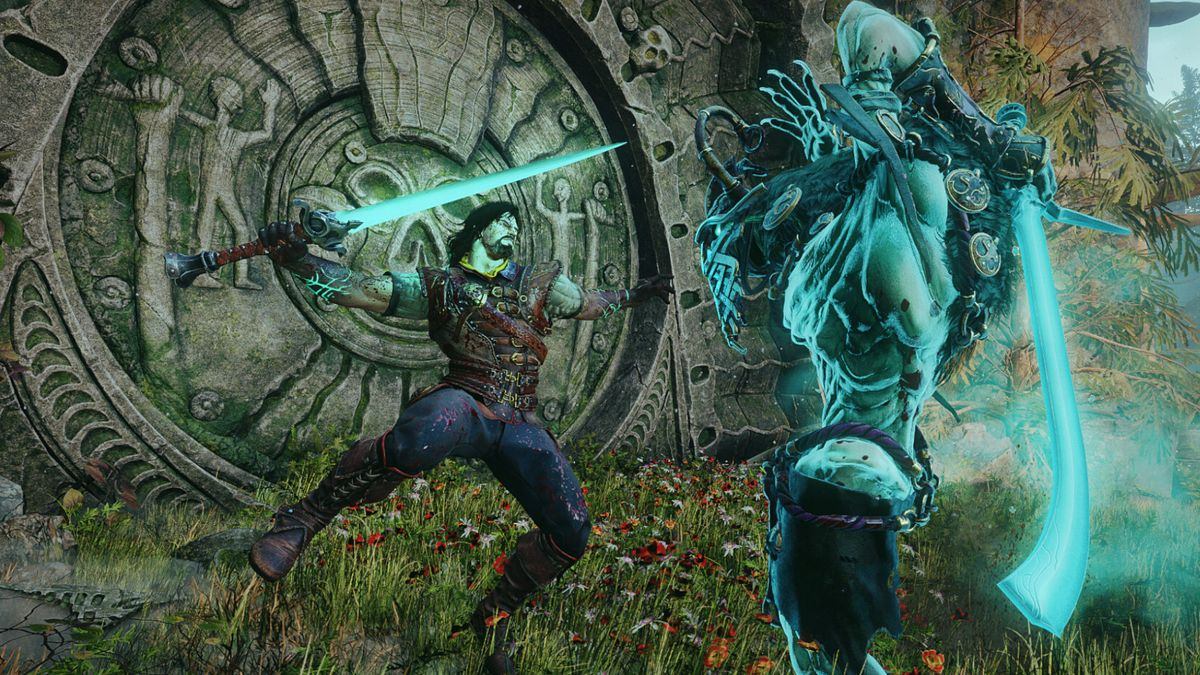
Overview of Blades of Fire
Blades of Fire is a third-person action-adventure video game developed by MercurySteam and published by 505 Games. Released on May 22, 2025, for PlayStation 5, Windows via the Epic Games Store, and Xbox Series X/S, it has generated a lot of discussion for its bold ideas and challenging gameplay loop.
The game aims to provide a grand sense of adventure, combining exploration with a highly detailed combat and crafting system. While it has received mixed reviews, its ambition is undeniable, offering an experience that feels both nostalgic and new. We will look into the game’s genre, storyline, and characters.
Genre and Setting
At its core, Blades of Fire is an action game with heavy RPG and adventure elements. It draws inspiration from multiple places; its interconnected world design has hints of a Metroidvania, reminiscent of the developer’s previous work on Metroid Dread, while its deliberate combat shares DNA with soulslike titles.
The game unfolds in a dark fantasy world with epic settings full of dilapidated ancient buildings and lush, dangerous landscapes. This world was created by an ancient race known as the Forgers, who gifted mankind with the knowledge of steel. However, a curse has turned most steel to stone, making your ability to craft weapons a rare and powerful gift.
This setting is central to the gameplay. You won’t just explore these lands; you’ll use the mystical forge to create weapons capable of overcoming the dark forces that plague them. The world itself feels like a character, with a history that you uncover piece by piece.
Storyline and World Building
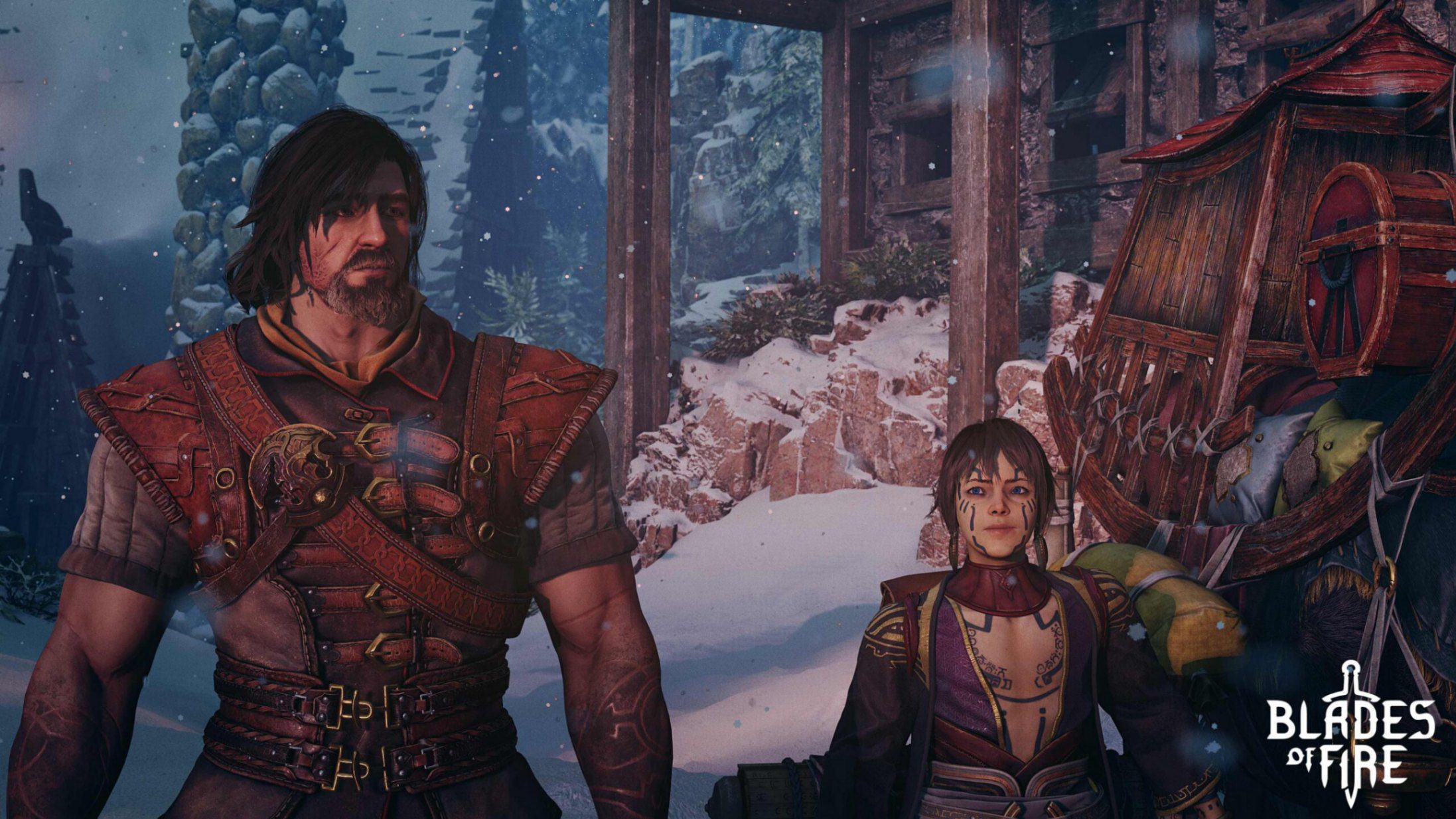
The story puts you in the shoes of Aran de Lira, a warrior gifted with a sacred hammer that allows him to forge steel weapons. Your quest is to reach the Royal Palace and defeat the newly crowned Queen Nerea, whose curse has rendered the kingdom’s armies useless. You are accompanied by a young scholar, Adso de Zelk, who documents your perilous journey.
What makes the narrative of this video game stand out is its commitment to its “dark fairytale” theme. The world building draws from classic fantasy movies and revenge stories. While some critics have drawn parallels to the character dynamics in titles like God of War, Blades of Fire focuses heavily on the theme of “reunion” and one man’s struggle against a seemingly insurmountable power.
The story unfolds at a steady pace, though it can feel understated at times. It avoids bombastic cutscenes in favor of letting the world and your actions tell the story. This approach makes your progression feel earned as you slowly piece together the lore and Aran’s true purpose.
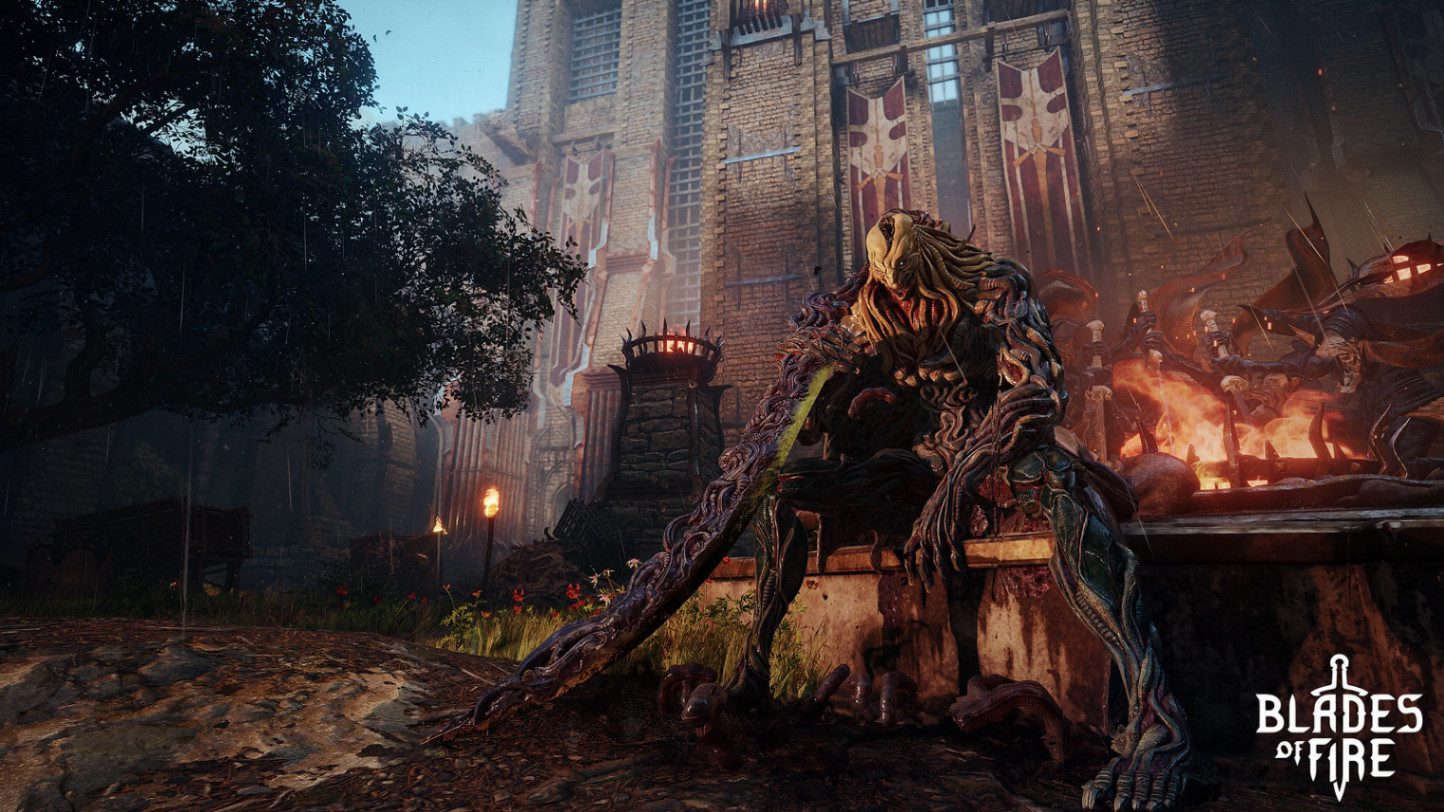
Key Characters in Blades of Fire
The world of Blades of Fire is brought to life by its core cast of characters. Your journey is defined by your interactions with them, whether they are allies or fearsome foes. You’ll play as the powerful warrior Aran de Lira, guided by the young and knowledgeable Adso de Zelk.
Standing in your way is the formidable antagonist, Queen Nerea, a ruthless ruler with a magical advantage. The dynamic between these key players drives the narrative forward, creating a classic tale of rebellion against tyranny. Let’s meet the main protagonists, antagonists, and other unique characters.
Main Protagonists
The most important characters you’ll follow are the central duo: Aran de Lira and Adso de Zelk. Aran is the brawn of the operation, a stoic and powerful warrior whose personality is described as “blunt.” He’s not just a fighter; his unique forging skills are the key to turning the tide of the war.
Adso de Zelk, a young scholar, serves as the brains. He accompanies Aran, providing useful tips, solving puzzles by deciphering ancient languages, and documenting the quest. His youthful energy is designed to contrast with Aran’s gruff nature, adding a human element to the dark and gritty adventure.
Their relationship is central to the experience. While Adso offers guidance and context, Aran’s actions drive the story. Together, they form a partnership that feels reminiscent of classic fantasy pairings, each relying on the other’s strengths to survive the treacherous journey.
Memorable Antagonists
The primary antagonist is the newly empowered Queen Nerea. Her rise to power came with a devastating curse that turns her enemies’ steel weapons to stone. This act makes her army of abominations and transformed soldiers nearly unstoppable, creating the central conflict of the game.
The main threats players encounter are these fierce enemies. You’ll face everything from clumsy skeletons to elite spearmen from the queen’s guard. Each enemy type presents a unique challenge, often requiring you to use a specific weapon or strategy to defeat them. The game features a large variety of humanoid foes, each with its own quirks and attack patterns.
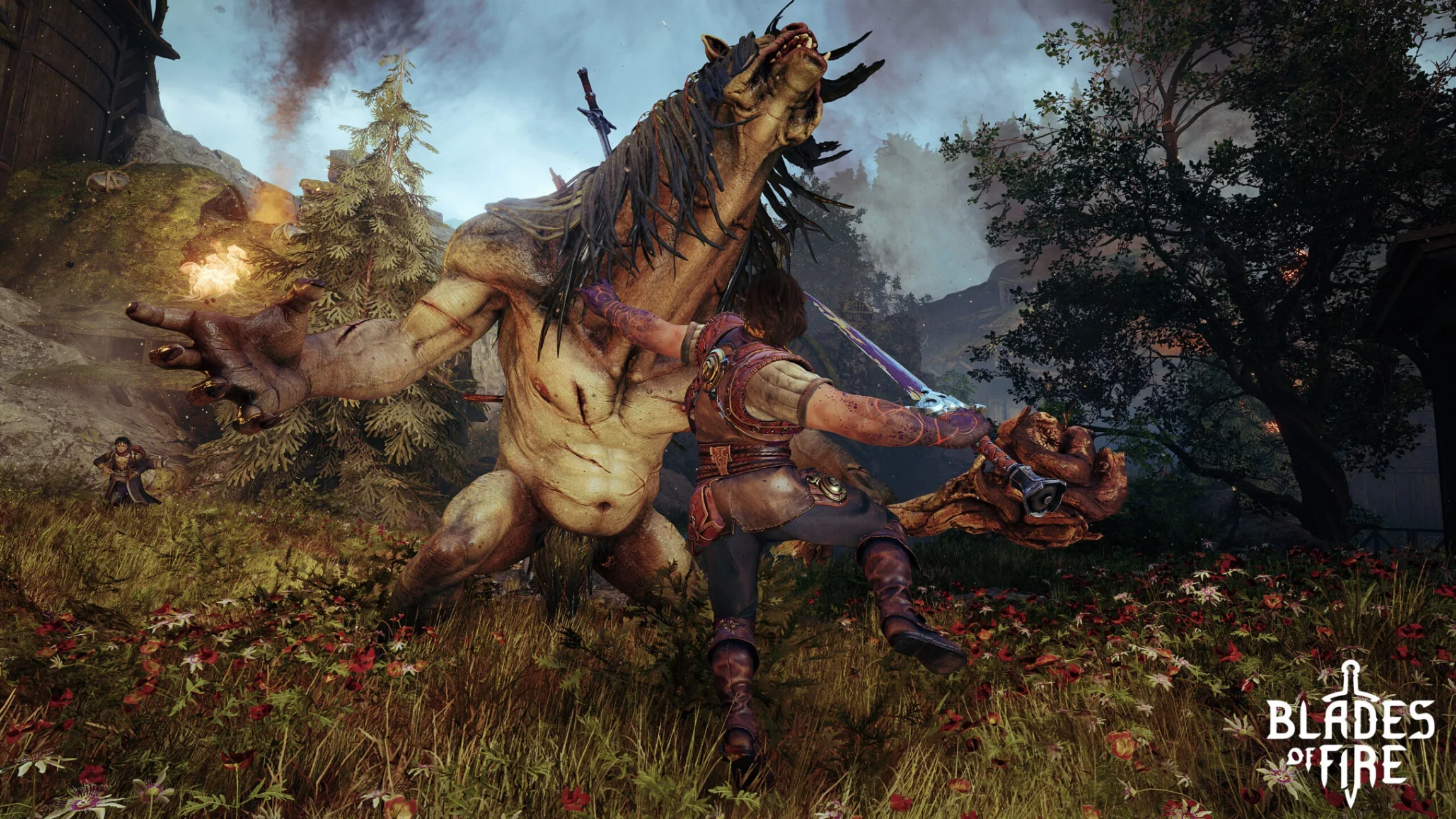
Beyond the regular soldiers, you’ll also battle hulking behemoths and powerful bosses that will test your combat skills and your choice of weapon. Defeating these enemies is not just about survival; it’s also how you unlock new blueprints to expand your own arsenal.
Unique NPCs You’ll Meet
Your adventure is populated with more than just enemies. You will encounter several unique Non-Player Characters (NPCs) who significantly impact your journey. The lore speaks of the Forgers, an ancient race who created mankind and whose legacy Aran now carries. Their presence is felt throughout the world in the form of ancient texts and hidden artifacts.
How do NPCs impact your adventure in Blades of Fire? They are crucial for your progress. For example, Adso, your constant companion, helps you solve puzzles and understand the world. You’ll also meet characters like Glinda the Master Forger, who can trade your used weapons for rare crafting materials.
Other NPCs might offer unique forge scrolls or vital information. Even the Queen's guards, when defeated, provide blueprints for their weapons. These interactions make the world feel more alive and provide tangible rewards that directly enhance your gameplay experience, encouraging you to engage with everyone you meet.
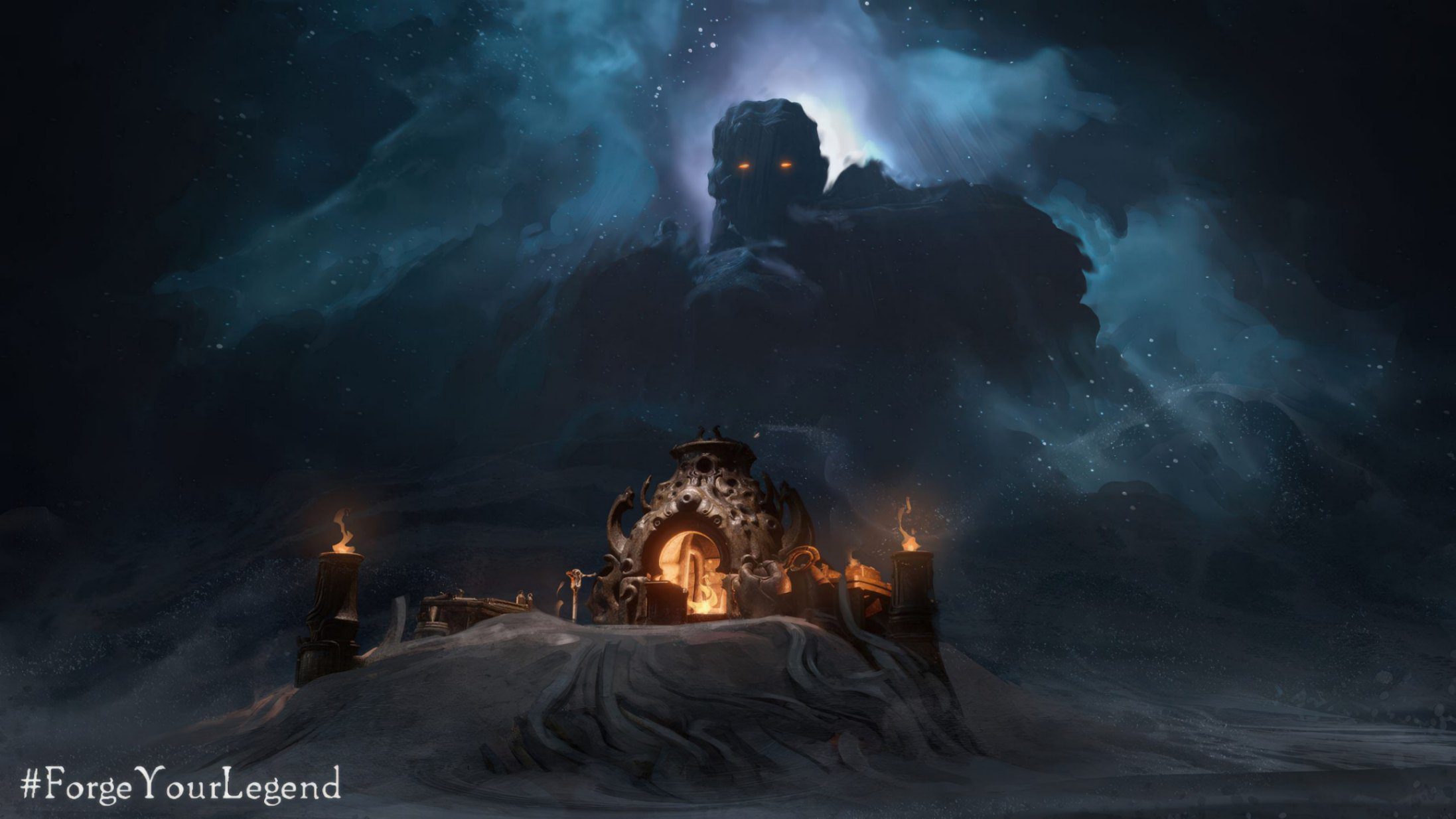
Gameplay Mechanics and Combat System
The gameplay of Blades of Fire is built on three pillars: exploration, crafting, and combat. The combat system in this video game is particularly noteworthy, demanding a slow, deliberate, and tactical approach from the player. It’s not a game for button-mashing; every swing and parry counts.
This design philosophy, compared by its creators to a “duel in a Kurosawa movie,” forces you to think like a warrior. You must understand your weapon, your enemy, and your environment to succeed. We will now look at the game’s weapon variety, customization, and tactical combat features.
Weapon Variety and Customization
The forge is the heart of Blades of Fire. Here, you can craft your own weapons from blueprints unlocked by defeating enemies. The system allows for near-infinite weapon combinations, giving you a remarkable degree of personalization over your arsenal. You choose the materials, such as different types of steel or divine metal, which affect stats like durability and penetration.
You can also modify the physical properties of each weapon, altering its length, the shape of the blade, and the hilt. These choices impact its weight, balance, and edge quality. The system even includes a mini-game where you physically hammer the weapon into shape, with your performance affecting its final quality and the number of repairs it can withstand.
How much personalization does the weapon system allow? The depth is impressive. You can even name your creations, forging a personal connection with them.
|
Customization Aspect |
Impact on Gameplay |
|---|---|
|
Material Choice |
Determines base stats like durability, penetration, and defense. |
|
Blade/Head Shape |
Affects the weapon’s damage type (slashing, piercing, blunt). |
|
Length/Handle |
Influences weapon range, speed, and stamina consumption. |
|
Forging Quality |
Dictates the maximum number of repairs before the weapon breaks. |
Tactical Combat Features
What differentiates the combat from other action games are its unique tactical combat features. Instead of complex combos, the challenging combat system is about precision. You target specific body parts of the enemy—head, torso, left, or right side—using your controller’s face buttons. An enemy highlighted in green can be damaged by your current weapon, while red means your attacks will be useless.
This system forces you to choose the right weapon for each encounter. A sword might be ineffective against an armored foe, requiring you to switch to a blunt hammer or a piercing spear. Your fighting style must adapt constantly, as some enemies can even move their weak points mid-battle.
Success relies on more than just attacking. You must manage stamina, which regenerates when blocking. A well-timed parry can break an enemy’s defense, opening them up for a devastating counter-attack. This slow, methodical approach makes every fight feel like a meaningful duel.
Exploration and Adventure Elements
Blades of Fire is not just about combat; it’s a true adventure. The exploration element is a massive part of the experience, inviting you to get lost in its large, interconnected world. The game doesn’t hold your hand, encouraging you to discover its secrets on your own terms.
These epic settings are filled with alternate paths, hidden locations, and rewarding discoveries. This focus on player-driven discovery makes journeying through this video game feel both daunting and incredibly satisfying. We will now look into the game’s map design and the secrets that await.
Map Design and Environments
The map design in Blades of Fire is both one of its most ambitious and controversial features. The environments are incredibly vertical and labyrinthine, with winding paths that often loop back on themselves. Some players find the in-game map insufficient for navigating these complex spaces, leading to moments of confusion.
However, what makes exploration exciting in Blades of Fire is this very complexity. The world is designed to be discovered, not just traversed. The epic settings—from ancient ruins to lush forests—are visually stunning and packed with secrets. You are constantly rewarded for straying from the main path.
This design encourages you to pay attention to your surroundings and use your intuition. While it can be frustrating at times, the thrill of finding a hidden path that leads to a powerful upgrade or a breathtaking vista is a core part of the game’s charm.
Secrets, Puzzles, and Side Quests
Are there rewarding activities outside the main story? Absolutely. The world is dense with secrets, puzzles, and side quests that offer substantial rewards. Exploration is never just for sightseeing; it’s essential for character progression. Your companion, Adso, will often be key to solving a puzzle by deciphering ancient text to reveal a hidden passage.
These optional activities are crucial for powering up Aran. You can find items to increase your number of healing flasks, gems to boost your maximum health or stamina, and dyes to customize your outfits. Many hidden paths lead to shrines that upgrade your weapon customization options, allowing you to build even better gear.
The biggest rewards often come in the form of forge scrolls. These rare items unlock new weapon parts or techniques, making your time spent exploring well worth the effort. Some key rewards include:
- Shrines that improve your forging capabilities.
- Chests containing items to increase your healing flasks.
- Gems that permanently raise your health and stamina bars.
- Unique dyes for customizing Aran’s appearance.
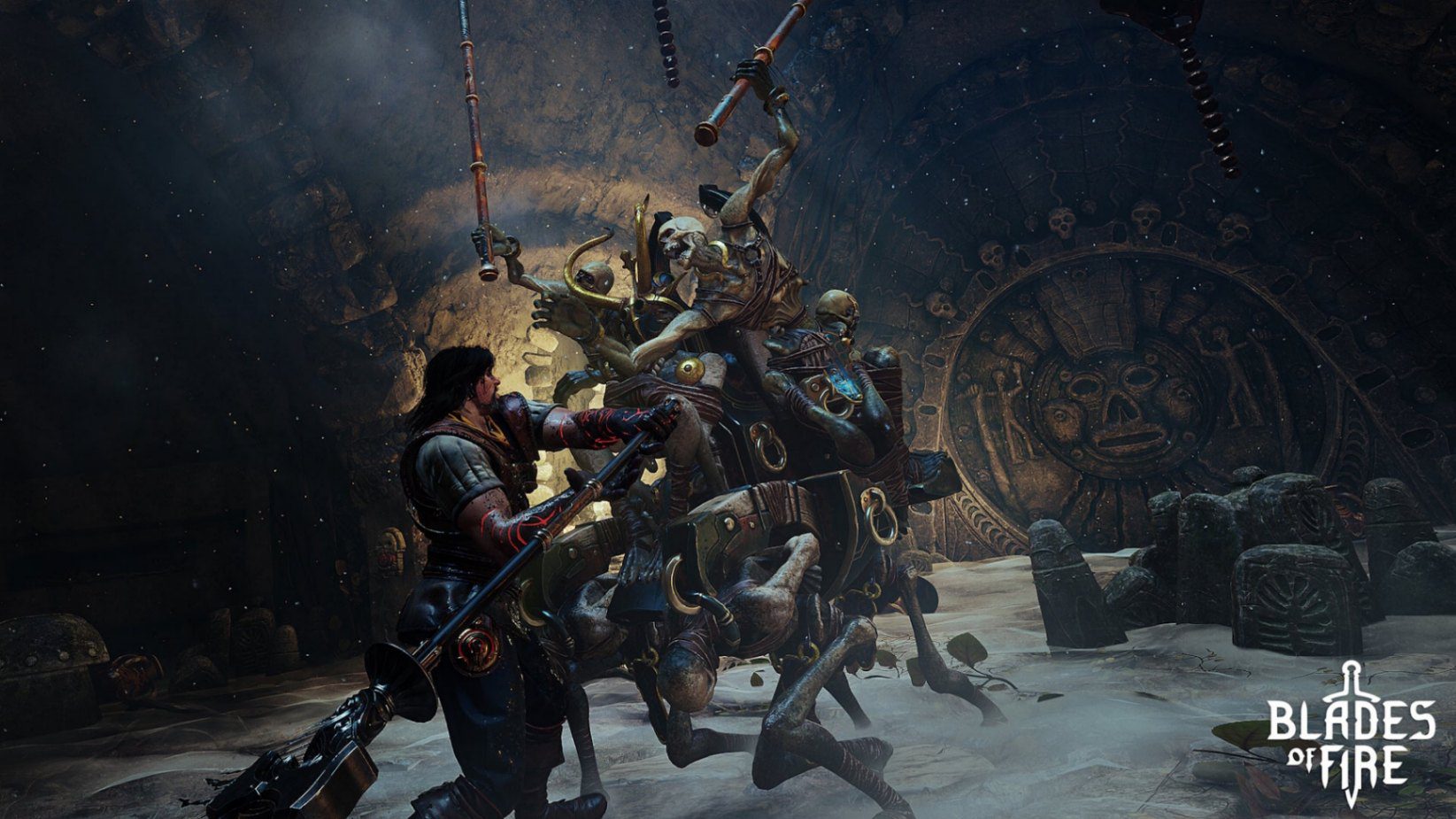
Visuals and Audio Experience
A game’s atmosphere is defined by its sights and sounds, and Blades of Fire delivers a memorable experience. The developers intentionally moved away from hyper-realism, instead adopting a highly expressive art style and animation that gives the game a unique identity.
This visual flair is complemented by a powerful original soundtrack and impactful audio design. Together, these elements create a cohesive and immersive dark fantasy world that feels both grand and dangerous. Now let’s look at the game’s art style, animation, original soundtrack, and effects.
Art Style and Animation
How does the game’s design enhance immersion? The unique art style of Blades of Fire is a major factor. Inspired by the work of comic artists like Frank Frazetta and Gustave Doré, the game uses “vivid colors” and “dramatic compositions,” as stated by the developers in an interview with the Epic Games Store. [Source: store.epicgames.com] This gives the epic settings a painterly, almost mythical quality.
The animation is deliberate and weighty, reinforcing the feel of the combat. Every swing of a heavy axe feels powerful, and every nimble dodge looks intentional. This expressive style extends to the world itself, with details like the glowing runes of the ancient forger language adding to the mystery and atmosphere.
This artistic direction helps the game stand out in a genre often dominated by realistic graphics. It enhances immersion not by mimicking reality, but by creating a distinct and believable fantasy world that is compelling to explore.
Original Soundtrack and Effects
The original soundtrack, composed by Óscar Araujo, is another highlight. How does music build atmosphere in Blades of Fire? The score perfectly complements the game’s “dark fairytale” theme, swelling during epic boss battles and fading into haunting melodies as you explore forgotten ruins. The music is a constant companion that shapes the emotional tone of your adventure.
The sound effects are equally important. The clang of your hammer striking steel in the forge, the scrape of a sword parrying an attack, and the guttural roars of monstrous enemies all contribute to the visceral feel of the world. The audio design is crisp and impactful, making every action feel significant.
From the quiet moments of discovery to the intense chaos of a fight, the soundscape is expertly crafted. It’s a key part of what makes the game so immersive, pulling you deep into its fantasy setting.
Community & Multiplayer Features
While Blades of Fire is primarily a single-player experience, it fosters a strong player community around its deep mechanics and challenging gameplay. Players connect through various forums and social media to discuss strategies, share weapon designs, and help each other navigate the game’s trickier sections.
Though direct multiplayer modes like co-op play are not the focus, the sense of a shared journey is very much present. Let’s explore the online modes and the community that has grown around this ambitious title.
Online Modes and Co-Op Play
So, how can you play with friends in Blades of Fire? The game is officially listed as a single-player adventure, meaning there is no traditional co-op play for the main story campaign. The narrative is designed as a solitary journey for Aran and Adso.
However, the game includes asynchronous online modes that create a sense of connection. When you fall in battle, your last-used weapon is left behind as a stone effigy. Other players on Xbox Series and PlayStation might see these remnants in their own worlds, serving as a ghostly reminder of another warrior’s struggle.
While fans have expressed a desire for true cooperative modes in future updates, the current online integration focuses on these subtle, world-building interactions. They add a layer of shared experience without detracting from the carefully crafted single-player focus.
Player Community and Tips
Where can players find tips and connect with others? The player community for Blades of Fire is active on platforms like Reddit, Discord, and various gaming forums. These are excellent places to discuss the game, which was originally developed under the codename Project Iron.
In these communities, players share their discoveries, from the locations of rare forge scrolls to strategies for defeating tough bosses. You’ll find detailed guides on the weapon forge, with players showing off their custom-named creations and debating the best material combinations.
Newcomers can benefit greatly from the community’s collective knowledge. Some common tips you might find include:
- Don’t be afraid to experiment with different weapon types early on.
- Trade in your high-reputation, used weapons with Glinda for rare materials.
- Pay close attention to the environment; many secrets are hidden in plain sight.
- Master the parry. It’s more important than mashing the attack button.
Conclusion
As we wrap up our exploration of “Blades of Fire,” it’s clear that this game offers a rich tapestry of experiences that cater to a wide range of players. From its captivating storyline and intricate world-building to the tactical combat mechanics and stunning visuals, every aspect contributes to an engaging adventure that keeps players coming back for more. The community features further enhance the experience, allowing players to connect and share strategies. If you’re looking for a game that combines immersive storytelling with dynamic gameplay, “Blades of Fire” is worth checking out. Don’t miss out on the chance to dive into this unique world—your next adventure awaits! If you have any questions or want to share your experience, feel free to reach out!
Frequently Asked Questions
What platforms is Blades of Fire available on?
Blades of Fire is available on current-generation platforms. You can play it on PC exclusively through the Epic Games Store, as well as on console with versions for the PlayStation 5 and Xbox Series X/S.
Are there any plans for future updates or expansions?
While the developer, MercurySteam, has not officially announced any major expansions, it’s common for games of this scale to receive post-launch updates for balancing and bug fixes. Given the game’s ambitious scope, born from what was known as Project Iron, many fans are hopeful for new content in the future.
Is Blades of Fire suitable for all ages?
This video game is likely not suitable for all ages. The combat system is described as brutal, and it features gruesome animations like mutilating enemies. As a dark fantasy action game, it is intended for a mature audience. It’s best to check the official ESRB or PEGI rating before purchasing.